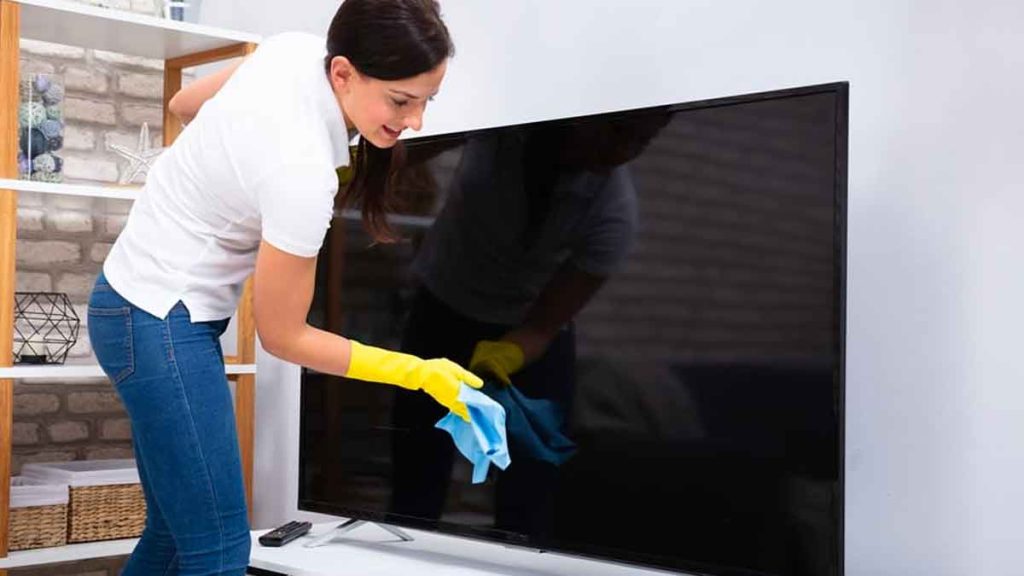
Streaks and fingerprints that shine in bright scenes can ruin a movie night in seconds, even on a premium TV Display. Because the surface looks like plain glass, many people instinctively reach for window spray without thinking twice. Yet those quick squirts can quietly attack the fragile layers that protect the screen. Understanding why glass products are risky helps you swap dangerous habits for simple routines that keep pictures clear.
Why Glass Cleaners Damage Screens
Modern flat screen televisions are built with a thin anti-glare coating that softens reflections and keeps images comfortable to watch. This invisible layer helps dark scenes stay readable and prevents faces from looking washed out under lamps or daylight from nearby windows. When the coating is intact, colours look even and contrast stays strong across the whole screen.
Glass cleaners, however, are designed for bare window panes, so they rely on strong solvents to dissolve grease and stubborn marks. On a coated panel, those same ingredients can slowly roughen or strip the surface instead of just lifting dirt. The result is often cloudy patches, rainbow streaks or dull areas that never really disappear.
Once that film is damaged, the picture on your TV Display usually changes for good. No polish or home remedy can rebuild the coating evenly, which is why prevention matters more than any cure.
Glass Sprays Threaten Your TV Display
Major brands such as Samsung publish very clear lists of products that must never touch a flat screen. They warn against window cleaners, ordinary soap, abrasive cleaning powders and chemicals made for glass that contain alcohol, benzene or ammonia. LCD panels are simply too soft and sensitive to survive repeated contact with those harsh formulas.
Specialist cleaner maker HG points out that many internet guides still promote risky shortcuts. Some recommend Windex, vinegar, methylated spirits, generic glass cleaner or all-purpose cleaner as if a television were just another mirror. These mixtures might leave a bathroom window sparkling, yet they gradually attack the fine protective film that controls glare.
The danger is that damage builds slowly, so people think their method works and keep repeating it. Months later they notice uneven reflections, strange blotches or permanent streaks that spoil the image on a TV Display during every bright scene.
Daily Habits To Protect Your Screen
Manufacturers agree that if a television only looks dusty, the safest option is to avoid cleaners entirely. Turn the set off, let the panel cool, then glide a clean microfiber cloth very gently across the surface. This type of cloth traps dust instead of pushing it around and works without pressure or extra products.
Cloth choice matters because tissues and paper towels hide tiny wood fibres that can scratch delicate coatings. What starts as invisible hairline marks may soon catch the light, forming swirls that are impossible to polish away. A soft microfiber cloth folds neatly into your hand and glides smoothly over the glass with minimal effort.
Light, regular dusting prevents thick build-up that might tempt you to scrub or reach for aggressive sprays. When loose particles never have time to settle firmly, your TV Display stays clearer for longer and cleaning sessions stay short and calm.
Safe Liquids For Your TV Display
Sometimes a dry cloth is not enough, especially when fingerprints or greasy splashes sit in the middle of the screen. Then most manufacturers suggest slightly dampening your microfiber cloth instead of reaching for powerful chemicals. Distilled water works best because it has no minerals that might leave rings, streaks or gritty deposits.
Generic products sold as “screen cleaners” can be confusing, since their names sound safe even when ingredients are not. Some still contain alcohol or other solvents that manuals clearly forbid for LCD panels. The safest option is usually a cleaner made by the television brand itself or clearly approved in official instructions.
Home recipes with rubbing alcohol or vinegar appear in plenty of cleaning guides, but they remain risky without explicit approval. Both act as solvents that can thin or discolour protective films, so careful owners stick to distilled water or a maker-approved solution on a TV Display.
Step By Step Routine For Safer Cleaning
A calm routine makes cleaning feel easy and reduces the chance of mistakes. Start by switching the television off and unplugging it so the panel cools and static fades. Then fold a clean microfiber cloth, support it with your hand and sweep gently from top to bottom in overlapping lines to lift dust.
If marks remain, mist distilled water or approved cleaner onto a second cloth, away from the screen. The cloth should feel barely damp rather than wet, because excess liquid can creep towards the frame. Work on smudges with small circular motions, keeping your touch light so the surface never flexes or bends.
When you finish, take a dry part of the cloth and buff the panel to remove any last traces of moisture. Never spray liquid directly on the glass, since drips can seep into the case and shorten the life of a TV Display.
Protect your television today for clearer pictures tomorrow
Glass spray belongs in the kitchen and bathroom cupboard, not next to the remote. When you treat your screen like a sensitive optical surface rather than a window, you preserve the coatings that shape every scene. A soft cloth, distilled water and a little patience keep your TV Display bright, comfortable and free from scars. Those small habits cost almost nothing, yet they protect the picture you relax with every single day.