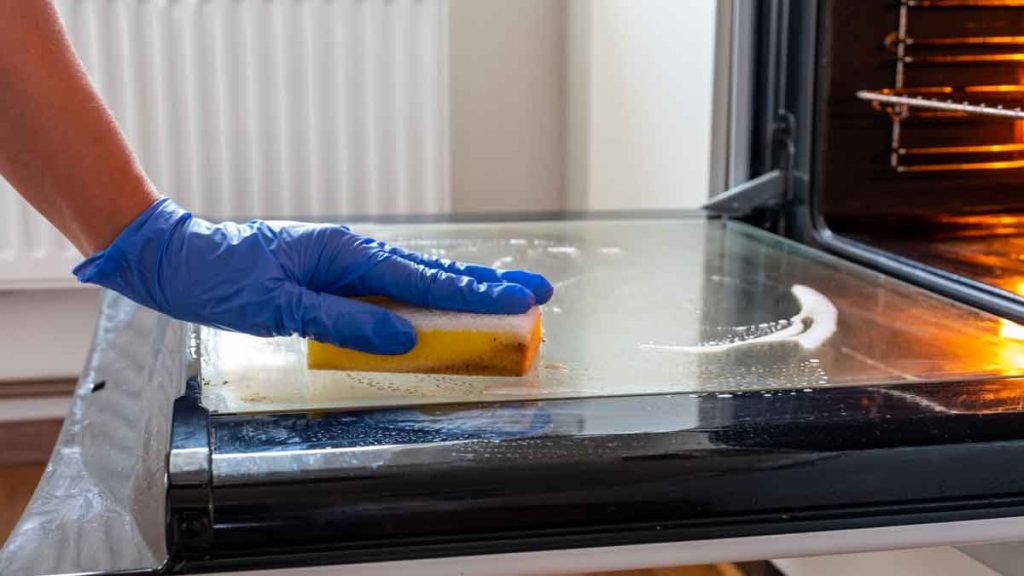
A cloudy oven window can quietly steal the joy from cooking, one greasy layer at a time. When splatters build up, checking doneness turns into guesswork, and opening the door wastes heat. Giving your glass oven door its own simple routine changes everything. With gentle pantry products, a few minutes of attention, and expert advice, you get clear glass again. Your oven feels fresher, your meals are easier to monitor, and cleaning stops feeling overwhelming.
Glass oven door supplies and a simple starting method
Start with basics that cut grease yet protect glass.
Gather :
- vinegar
- a microfiber cloth
- baking soda
- Dawn dish soap
- a non-abrasive sponge.
If your range has stainless trim, keep a stainless cleaner nearby. Bar Keeper’s Friend is a reliable option. Place towels under the door to catch drips and protect floors.
Experts favor light solutions first. Mix a 50/50 vinegar-and-water spray for everyday smudges and exterior fingerprints. Spray, then wipe with a clean microfiber cloth. Lift residue with gentle, overlapping passes. When stainless surrounds the panel, apply stainless cleaner only to metal, then buff along the grain to avoid marks on the glass oven door itself.
Good habits reduce scrubbing later. Keep a dry microfiber cloth on a hook near the oven. After cooking, let the door cool, then wipe fresh spots before they cling. A minute now prevents buildup. Because light, routine care preserves clarity, deep cleaning sessions stay shorter and far less tiring.
Clean the exterior surfaces with care
The front panel sees constant contact, so smudges and stovetop drips show first. Spray the 50/50 vinegar mix onto the cloth, not the glass, to control moisture near seams. Wipe edge to edge. Flip the cloth as it loads up. Finish with a dry microfiber for a streak-free sheen on your glass oven door.
When prints persist, use a damp, non-abrasive sponge to loosen oil. Follow with a microfiber pass. If stainless frames the glass, clean that metal last, so polish doesn’t transfer back. Steer clear of gritty powders on the exterior; they may haze glass and dull nearby trim, even with light pressure.
Check light angles. Tilt your head and look across the surface; streaks appear quickly under side light. Re-mist your cloth and glide in smooth paths. Small circular motions help at corners. Keep cloths separate for glass and for metal, since mixed residues can smear. Fresh solution and clean textiles matter.
Deep-clean the inside of a glass oven door
Inside panels face heat and splatter, so baked films need a paste. Stir ½ cup baking soda with water to a spreadable texture, then add a few drops of Dawn. Baking soda gives fine, safe abrasion; the soap breaks grease. Spread the mixture evenly across the glass oven door interior.
Let the paste sit for about 15 minutes. This pause softens stubborn spots, so scrubbing stays gentle. Work with a non-abrasive sponge using short strokes. Wipe away loosened residue with paper towels or a microfiber cloth. Rinse the cloth often so dissolved grease doesn’t streak across clean areas.
If paste lingers, switch to a mild rinse that neutralizes it fast. Mix one part distilled white vinegar with four parts water. Dip a clean, lint-free cloth, then remove remaining film in steady passes. Dry and buff with a fresh microfiber. Routine, light wipe-downs after roasting keep future scrubs brief.
Frequency, between-pane grime, and door removal notes
Cleaning frequency depends on use and habits. Frequent bakers may need monthly interior care, while light cooks can go longer. Spills wiped promptly cut the schedule in half. Many pros tie light exterior care to regular kitchen wipes, which keeps the glass oven door clear between deeper, scheduled sessions.
Doors often have two glass panes with a gap between. Dust or drips can slip inside that channel. Unfortunately, the only reliable fix is removing the door and accessing the panels. Follow your manual’s instructions, work on a padded surface, and keep track of screws. Photograph steps for easier reassembly.
If removal feels daunting, schedule a service visit. A technician can separate panels safely and re-seal properly. Meanwhile, prevent intrusion by avoiding heavy sprays aimed at vents or seams. Apply liquids to cloths first. Keep kids’ handprints in check with quick wipes, since oils travel along edges easily.
Safety, self-clean mode, and what to avoid
Never clean hot glass. Let the oven cool fully; thermal shock can stress panels. Skip harsh chemicals and gritty abrasives that scratch permanently. Use soft sponges and microfiber instead. Keep razors off the glass oven door; tiny gouges collect soil and make future shine harder to achieve.
Self-clean cycles reach extreme heat—around 900 degrees—which incinerate residue inside the cavity. Some ash may remain on the glass. After the cycle, allow complete cooling, then wipe the panel with vinegar water and buff dry. Even with self-clean, a targeted glass routine keeps clarity and reduces post-cycle haze.
Mind moisture. Excess liquid near seams can seep inside the door, leaving trails that are hard to reach. Spray onto cloths, not directly onto the panel. Refresh cleaning solutions frequently; dirty mixtures smear. Label separate cloths for glass and stainless so polishes and soaps never cross-contaminate your glass oven door.
Simple habits that keep clarity high and scrubbing low
Let the door cool, then wipe new marks before they set. Use a baking-soda paste for stuck film, and follow with a light vinegar rinse to clear haze. Skip razors and gritty powders so glass stays smooth. Keep one cloth for metal and one for glass. Plan quick weekly care; save deep sessions for spill-heavy weeks. With steady routines, your glass oven door keeps a bright, streak-free look that makes the whole kitchen feel new.