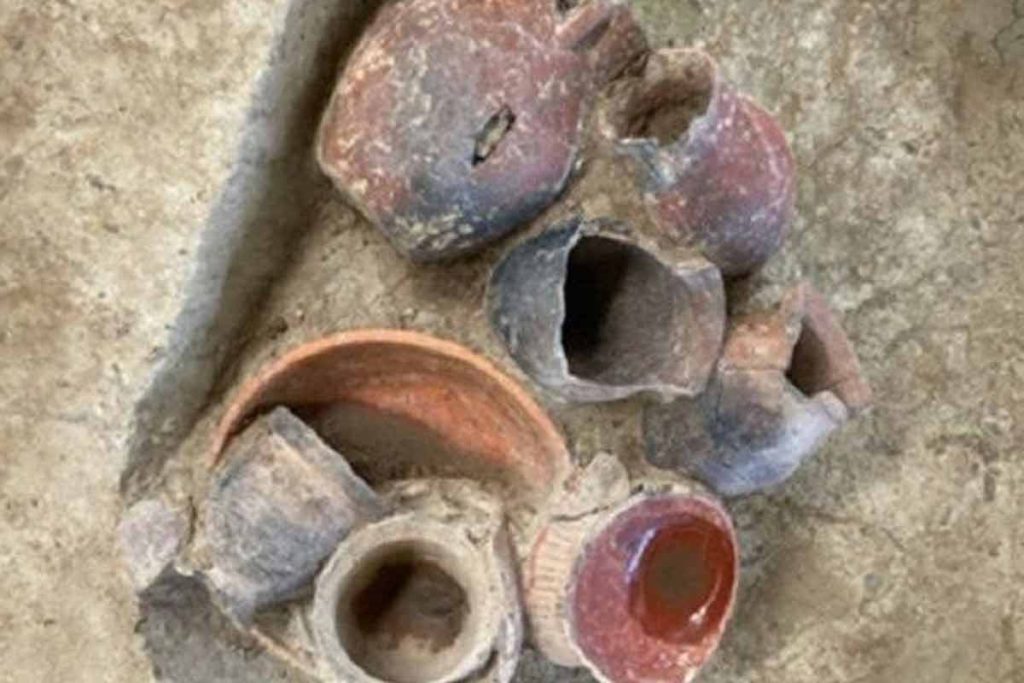
Centuries of wind swept the Sharjah desert while a heavy jar waited for daylight. When archaeologists pried it open, the quiet of the dunes gave way to silver and stories. The find upends the idea of an isolated Arabia; it points to caravan routes, shared symbols, and money that spoke across borders. At the heart of it all sits a simple vase, unexpectedly dense with value and meaning, a container that turns one excavation into a new map of the ancient world.
Sharjah’s Mleiha and the weight of a hidden hoard
Archaeologists working near Mleiha, in the United Arab Emirates, initially logged a routine clay vase. The jar weighed more than nine kilograms, unusually heavy for pottery. When opened, it revealed not water or grain, but hundreds of carefully preserved silver coins more than 2,300 years old, sealed against sand and time.
The hoard dates to the third century BC, squarely within the Hellenistic world that followed Alexander the Great. Its neat packing suggests intent: protection from theft, or savings awaiting calm. Either way, a deliberate deposit, not accidental loss, records a decision about wealth, risk, and memory on the desert’s edge.
Because the jar surfaced in Sharjah’s Mleiha, the context matters. The site anchors caravan routes between the Persian Gulf and the Gulf of Oman. Traders there needed reliable currency for long exchanges. This hoard proves not isolation, but connectivity, and it places Mleiha firmly inside ancient commercial circuits.
Scripts, and the story inside the vase
Most coins are tetradrachms, the Hellenistic workhorse, each weighing between sixteen and seventeen grams. Several early pieces display Alexander the Great as Hercules on the obverse and Zeus enthroned on the reverse. That iconography signaled authority across frontiers, so the hoard’s earliest strata carry imperial weight in image and in silver.
Later issues in the same hoard shift toward regional tastes. Inscriptions appear in Aramaic, and motifs adopt local symbols. The language of money flexes while staying legible across markets. A coin can speak to neighbors and partners at once, which helps a desert city balance identity and reach.
Numismatics reads these layers like tree rings. The sequence suggests adoption, then adaptation, of Greek standards. Rather than copying, Mleiha’s engravers and mints recalibrated symbols to suit local trust. Monetary design becomes policy: a way to join a wider economy without dissolving into it.
Trade routes, money use, and Mleiha’s regional reach
Mleiha’s geography explains the hoard’s breadth. Merchants moved incense, spices, textiles, and precious metals across corridors linking India and the Mediterranean. A container full of silver served daily exchange and distant deals. Even a single vase could bankroll caravans, pay escorts, or settle bulk purchases at oases.
Coins recognized across cultures make life simpler at border crossings. Standard weights reduce haggling and speed trade. Yet merchants still stamped regional signs to anchor confidence at home. That two-way logic—international legibility, local credibility—turns coinage into a social contract extending beyond city walls.
Hoards also chart stress. People bury savings when danger looms or leadership shifts. If retrieval never came, something interrupted routine. Studied with care, buried coins sketch waves of risk and recovery, and in turn highlight institutions that stabilized value. Mleiha’s cache maps those cycles in metal, not ink.
Timelines, figures, and how scholars read the ground
This hoard does not stand alone. Related coins appear elsewhere in the Gulf, including Bahrain and Kuwait. Shared symbols with local twists imply a monetary network, a web of trust. That network, although Hellenistic in origin, took root regionally, and evidence accumulates vase by vase, site by site.
Mleiha’s story reaches far deeper than Hellenistic silver. Excavations show human presence as early as 130,000 years ago. In the late first millennium BC, agriculture flourished thanks to falaj irrigation, an underground channel system moving water with quiet efficiency. Farming stabilized populations and financed craft, defense, and worship.
As prosperity rose, the settlement fortified. Palaces, temples, and workshops multiplied, a skyline of mudbrick ambition. Such infrastructure invites deposits like this hoard: surplus in need of safekeeping. The more complex a city, the more reasons a family might entrust savings to the ground for a season—or for centuries.
What this vase reveals about identity and power
Before finds like this, some histories confined Hellenistic influence to the Mediterranean, Mesopotamia, and northern India. The Mleiha hoard extends that map firmly into Arabia. Influence, though, did not mean uniformity. The coins’ evolution from Zeus to local marks shows negotiation, not surrender, of identity centered on a vase.
Money tells more than prices. It encodes allegiance, aspiration, and authority. When a city chooses regional scripts on international weights, it claims both voice and membership. That choice becomes strategy: to attract partners without abandoning self-definition, balancing openness with rootedness across trade winds and desert roads.
In that light, the hoard is not mere treasure. It is policy, ritual, and memory, bundled and sealed. Whether hidden during turbulence or saved for planned investment, the deposit shows conscious design. The past speaks in silver: Arabia was a participant, not a periphery, shaping exchange as much as receiving it.
Why this buried hoard still speaks across twenty-three centuries
The Mleiha discovery changes how we read Arabia’s past and its connections. Silver weights, shifting images, and a heavy jar together show how societies join wider systems without losing themselves. The humble vase becomes a witness: to trade that crossed seas, to scripts that bridged tongues, and to choices that made value tangible and trusted.