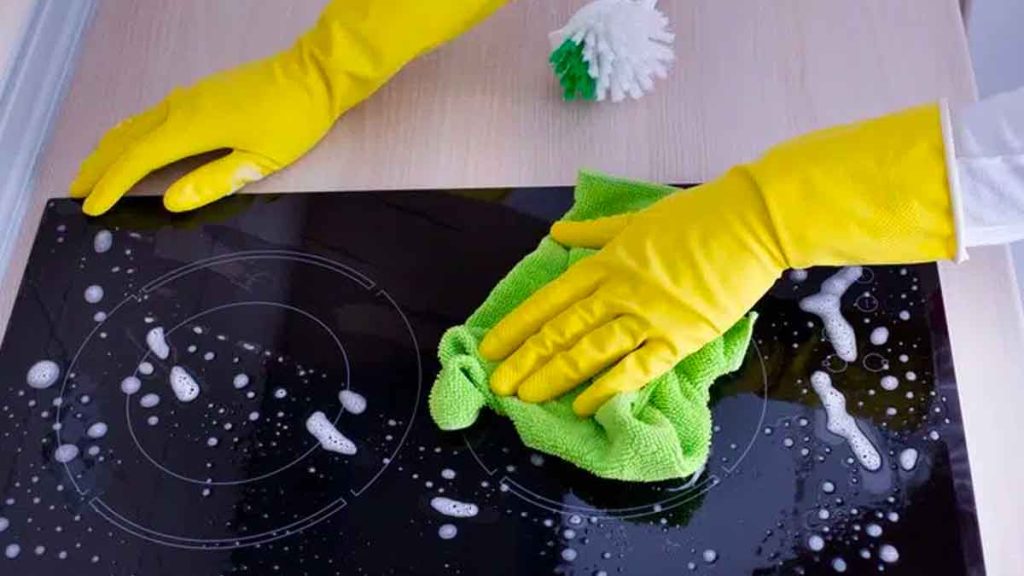
Grease pops, sauce splashes, and weeknight rushes leave marks. A calm routine restores order fast. Follow this clear plan to care for your glass top stove with safe products, light pressure, and smart timing. Pair brief daily wipes with a simple weekly deep clean. Prevent streaks and haze, and protect the delicate finish. The surface keeps its deep, reflective glow between meals. Even heavy messes feel manageable once dwell time does the hard work.
Care essentials that protect your glass top stove
A smooth cooktop cleans quickly because crumbs cannot hide under grates. Compared with gas, heat ramps slower and precision differs; however, the surface costs less to install and rewards routine care. A daily wipe on your glass top stove stops residue from baking and stretches time between deep cleans.
Before any cleaning, wait until the surface is fully cool. Hot glass flashes cleaner into vapor, which leaves streaks and can sting skin. Choose products made for ceramic or glass cooktops. Avoid abrasive pads, steel wool, or powders. They scratch, haze the finish, and dull the black mirror look.
Microfiber or soft cotton cloths glide without marring, while a damp—not soaked—approach controls moisture. Too much liquid creeps into edges and causes marks later. Wring cloths well and finish with a clean lint-free dry wipe. Light, circular passes lift film efficiently, and consistent pressure prevents swirl lines.
How often to clean and the rhythm that works
Quick maintenance takes seconds after cooking. Once the surface cools, swipe with a soft cloth to capture splatter, oil mist, and dust. That habit blocks buildup, meaning cooked-on rings rarely form and heavy scrubs become rare. Because routines beat marathons, tie this step to your nightly kitchen reset.
If you cook most days, plan a weekly deep clean. Let a cooktop-safe cream sit 15–30 minutes so it loosens grime while you tackle other tasks. Then return to wipe and buff. The dwell time does the labor for you, which protects the glass and speeds the shine.
For the weekly session, a single mention of your glass top stove in notes or checklists helps you remember correct products and motions. Consistency matters because residues layer. Regular, gentle passes keep performance steady and leave the surface ready for tomorrow’s meal, every time.
Before you start: cooling, tools, and gentle technique
Collect supplies to avoid back-and-forth. Gather dish soap, warm water, cooktop cream, microfiber, soft sponge or brush, lint-free rags or paper towels, and a razor scraper. Distilled white vinegar in a spray bottle helps spot treatment on a glass top stove. Skip bleach and ammonia-loaded glass sprays or wipes.
Safety and finish go together because pressure and grit create scratches. Use light circles and let chemistry break down grease instead of force. Moisture should stay minimal; pools can seep under trim. When needed, a razor held flat shaves stuck residue without digging into the surface safely.
Brand examples help. A cream such as Weiman Glass Cook Top Cleaner & Polish spreads easily, then buffs clear. A scraper from that kit keeps angles correct. For general wiping, a drop of Dawn in warm water lifts film. A multipurpose cleaner like Fantastik tackles greasy spots quickly.
Step-by-step deep clean for a glass top stove
Start by removing loose crumbs and burnt bits so they don’t drag across the surface. Next, wipe with warm, soapy water or a multipurpose spray to dissolve fresh spills. If stubborn mounds remain, glide a flat razor in strokes to lift them. Keep the blade nearly parallel to the glass.
Spread a thin coat of cooktop cream and let it sit 15–30 minutes, depending on soil. While it works, clean counters or the sink nearby. Return with a damp microfiber or soft sponge and massage the glass top stove. Then lift residue with a clean, wet cloth.
Dry thoroughly to stop water spots from forming along edges and logos. If haze lingers, repeat the cycle once more. For final gloss, finish with an ammonia-free glass cleaner or a fifty-fifty vinegar-and-water spritz. Wipe using a lint-free cloth or paper towel until the surface shines without streaks.
Stain removal, long-term habits, and when to call a pro
Some messes harden fast: oil spatter bakes on, tomato and chocolate mark the surface, and hard water deposits linger. Mist stains with equal parts vinegar and water, then wait 10 minutes. For tougher patches, add dish soap or dust baking soda before covering with a warm, damp cloth.
Lift the cloth, scrub gently with a soft sponge, and wipe with a damp rag until residue clears. Dry completely so minerals cannot settle. Keep momentum with habits: wipe after every use, wring cloths well, and store a kit. That way cleaning happens while the glass top stove stays cool.
Deep scratches around burner outlines or a cloudy panel signal time for a technician. Some marks buff out, yet severe damage may require glass replacement. To prevent problems, avoid sliding heavy cookware; pick it up instead. Clean cooled spills promptly so baked-on ridges never stress the surface.
A simple routine that protects shine, saves time, and keeps performance high
Small daily wipes and a thoughtful weekly session keep your glass top stove quick to maintain and reliably streak-free. With cool-first discipline, the right products, and light pressure, you’ll prevent scratches and outsmart stains. The dark mirror finish holds. Because the steps are simple and repeatable, the surface stays bright. Dinners move faster, and cleanup ends before momentum fades, night after night, even when schedules feel truly packed. That calm routine saves energy too.