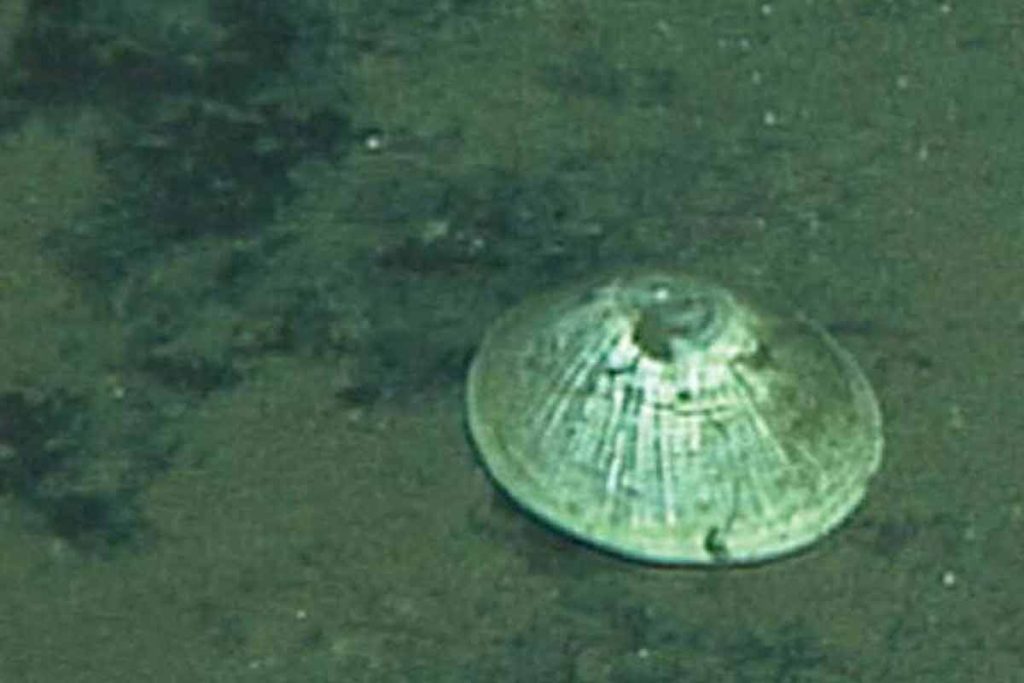
Far below the waves, where sunlight never reaches, a small shell has rewritten how we picture the deep sea. On a silent rocky ledge, a single mollusk has revealed that this hidden world is far richer than we thought. Its unexpected shape, color and behavior raised new questions about survival in crushing pressure and darkness. From that quiet encounter, scientists have traced a whole new branch on the tree of life.
A ledge in the abyss and what it revealed
The dive reached the normal deep seafloor, far below the tidal world most limpets call home. A crewed submersible scanned a volcanic escarpment and paused, because something unusual sat on clean stone. The animal was calm, and the scene suggested a slow, deliberate way of life.
The shell looked thin, translucent, and bluish gray, with white streaks radiating from the top. Those lines help separate species, and the shape also supported a new identity. The body beneath was reddish brown, and the muscular foot gripped rock with steady power.
Distance and depth sharpened the story, since the site lay about 300 miles (480 kilometers) southeast of Tokyo. Pressure and cold framed the encounter at roughly 19,430 feet (6 kilometers). The shell reached 1.6 inches (40.5 millimeters), which is large for a deep-living mollusk.
How a single mollusk becomes a name and a record
Several individuals passed the viewport, and one specimen was collected to anchor the name. That holotype now ties description to reality, because any researcher can check it in a museum. The trail behind it curved over a dusting of sediment, which confirmed a grazing habit.
Naming did not end at a pretty shell, since the team checked anatomy in detail. DNA from the COI gene placed the species within its family with strong support. Relationships were then tested against other limpets using a tree-building approach for clarity and rigor.
Recent phylogenomic studies suggest a single event moved true limpets into deep water. Later, lineages branched into several families, which fits the broader context here. This species extends the known depth limit for its group, so the record frames a deeper mollusk story.
Life on rock, not mud: habitats we kept missing
Many still picture the abyss as featureless mud; however, rocky patches prove more common than expected. Those hard surfaces host distinct communities, and nets or sleds usually pass them by. Because the patches are sparse, our gear often misses species that cling to stone.
Finding a limpet on bare rock at this depth strengthens that update with a clear case. The ledge carried only a thin film of settling particles, and the curving trail showed feeding. The animal scraped films from stone, and its movement marked a careful path.
Sampling these habitats requires direct observation, and submersibles change our reach in crucial ways. Pilots can follow a trail, inspect texture, and decide to collect on the spot. The evidence says our maps will gain more dots on rock, each dot a deep mollusk we overlooked.
What sets this mollusk apart from its closest kin
Two relatives were known before: one from Antarctica and one off Chilean waters. The Antarctic species, Bathylepeta linseae, was described in 2006 with a different shell outline. Details of the scraping mouthparts also diverge, which signals separation that matches genetic distance.
The new limpet is larger, and key teeth on the radula show stronger development. A reinforced scraping edge makes sense, because soft films need sweeping without drift. Those teeth patterns support the feeding style seen on the ledge, so form aligns with function.
Depth also matters, because pressure, temperature, and food supply change the rules below. Living at about 19,430 feet (6 kilometers) sets the deepest mark for a patellogastropod. That record is not a headline alone; instead, it flags a habitat where a mollusk can thrive.
Tools, traits, and the map they help redraw
Crewed submersibles proved decisive, and direct observation turned a hint into a specimen. Cameras showed shell streaks, while judgment picked the right moment to sample. Tools open doors, and attentive eyes make the calls that change lists and maps.
The trail showed grazing on fine material that settles from above in tiny flakes. Strong jaws and large, curved marginal teeth match that soft-film diet on stone. The animal sweeps, scrapes, and stays put, so the design resists drift while harvesting thin food.
The sighting off Japan hints the genus may span wide stretches of deep ocean. Gaps likely reflect how rarely we visit cliffs and fault lines at those depths. With more dives, collections, DNA, and careful images, patterns will emerge and place each deep mollusk precisely.
Deep sea discoveries that still reshape our scientific maps
Bathylepeta wadatsumi proves that even one modest mollusk can transform what we think we know about the abyss. By extending the depth record for true limpets, it also highlights overlooked rocky ledges as vital habitats. That turns a remote cliff into a key reference point. Each future dive that follows similar trails could reveal new species, fresh genetic clues and unexpected habitats. Step by step, those finds would redraw our understanding of life in the darkest parts of the ocean.